The California Bureau of Juvenile Research
Evil isn’t always obvious. Eugenics, the science of better human breeding, seemed to some like a good idea. Its proponents envisioned a perfect society made up of healthy, strong, beautiful, intelligent, and morally upstanding citizens. But how did eugenicists go about deciding who fit such a description? And, most importantly, who didn’t? A primary source analysis of eugenics in the making reveals how eugenics created a nightmare for thousands of individuals and families. We take California, the epicenter of eugenic practices and methodologies in, arguably, the world, as a case in point.
From 1910 to 1924, the Eugenics Record Office in Cold Spring Harbor, New York, trained hundreds of eugenic field workers to assess the genetic worth of the U.S. populace in various cities across the nation. This was part of a larger, national project of racial, social, and biological improvement that used the latest social theories and scientific knowledge to find, categorize, confine, and stop unwanted people from having children. Deciding why and how someone was unfit, though, left the door open for interpretations that would have dire consequences on the most vulnerable people in the country.
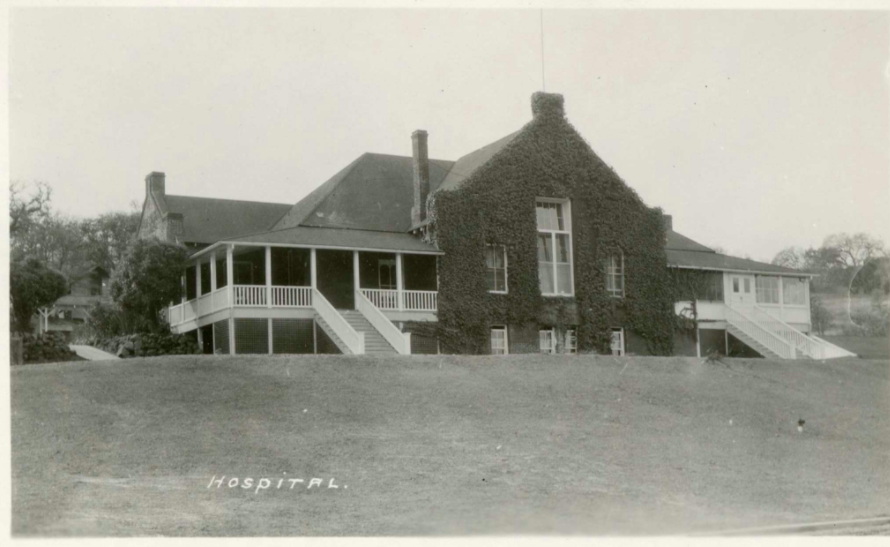
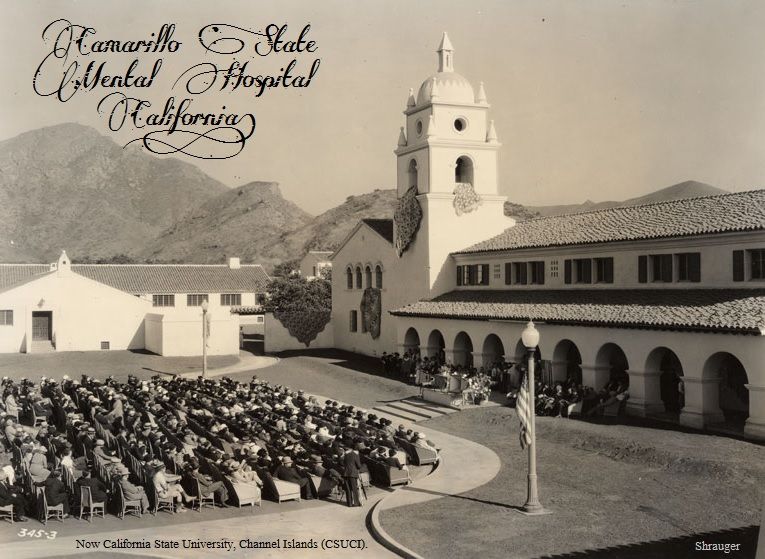
In 1915, a cohort of about half a dozen eugenic field workers went to the Golden State to collaborate with Stanford University and the University of California. They established a think-tank and research laboratory of dysgenic (biologically, socially, and morally unfit) human subjects in the state. That same year, they founded the Whittier State School Department of Research (later, California Bureau of Juvenile Research), created their own eugenic field worker training program, and designed and outlined norms and categories for the eugenic assessment of individuals, families, homes, and neighborhoods. These eugenic professionals sought subjects of study at state hospitals, homes for the “feebleminded,” juvenile delinquency institutions, reformatories, and industrial schools.

Within a few years of the CBJR’s start, a group of striving, young, White, middle-class women aimed to prove their worth in the sciences and social sciences as intelligent, super-abled agents of the science of better breeding. However, to make their name within a patriarchal society, eugenic field workers had to stomp on the bodyminds—to use disability scholar Margaret Price’s phrasing—of criminalized, pathologized, and often racialized individuals and families. That is, eugenic field work provided a vocational avenue for a marginalized group—White women—to excel in the predominantly male-led domain of science and, at the same time, their profession required that they demean and exploit the physical and mental differences of people in more precarious socioeconomic conditions than the field workers themselves. California’s field workers amassed hereditary data of at least 460 families, from 1915 to 1923, which amounted to the hereditary information of over 10,000 individuals.
The bulk of the investigations and gathering of data, however, took place after 1918, when the program hired on another cohort of field workers. The same year, Sonoma State Home, an institution for the “feebleminded,” hired Fred O. Butler, a superintendent-physician who would become the most efficient sexual sterilization surgeon in the nation and would make Sonoma the top institution to carry out the most sterilizations, especially after 1922. It was so efficient that other California hospitals, asylums, prisons, and correctional facilities would send criminalized and pathologized individuals to Sonoma’s operating tables. By 1979, the Golden State coercively sterilized at least 20,000 people.
This page has paths:
- The State and Institutions Gianna May Sanchez
- California Jacqueline D. Wernimont