Courts and the Law
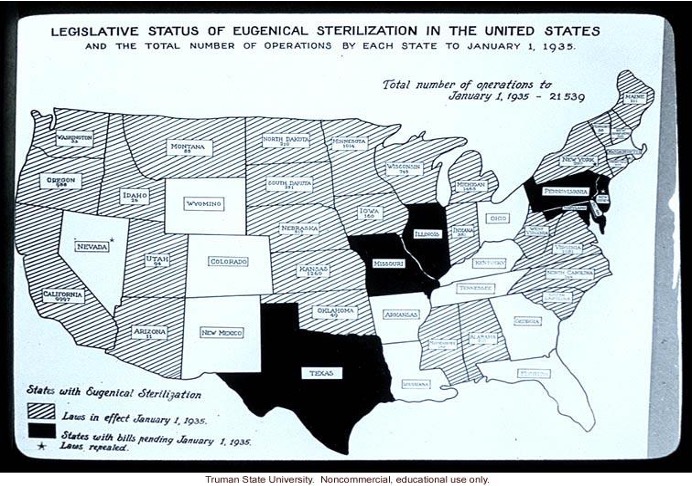
In many states a link between criminal justice systems and eugenic boards/facilities were evident with some patients coming into the eugenic state systems directly through parole and police officers. Criminal records were often cited in evaluations and in some states, including North Carolina, initial eugenic sterilization laws were deemed unconstitutional because they functioned as additional punishment for behavior deemed criminal.
While some early eugenic laws were replaced due to their unconstitutionality, many officials continued to mention encounters with law enforcement by either the patient or their family members in their sterilization recommendations. These observations were often cast as part of an assessment of “moral quality,” which could include anything from having experienced sexual trauma, to poverty, to nationality as part of a purportedly clinical assessment of disability.
This page has paths:
- Critical Themes in the History of Eugenics Gianna May Sanchez