Sonoma: A California Institutional History
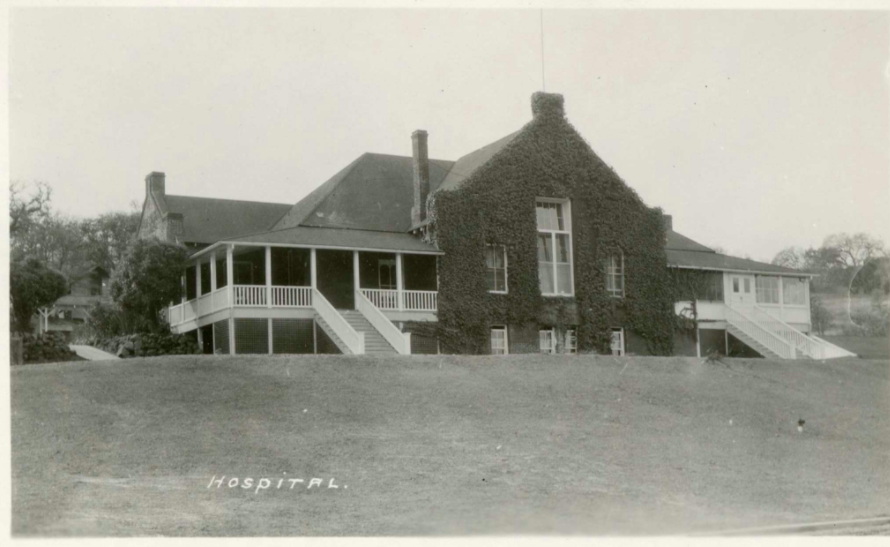
Sonoma was a huge facility, encompassing over 2.6 square miles, with buildings for the staff (who resided there year-round), cottages for patients, a farm, stable, tannery, canning, school, hospital, kitchen, cafeteria, morgue, and more. Like many other asylums built in America in the late 1800s, Sonoma was intended to be self-sufficient — its own contained world. It was so big it was designated the town name of Eldridge and had its own zip code. Decade after decade, Sonoma was expanded with major projects, including a new hospital in 1931, and additional buildings to house more patients in 1948.
Sonoma’s annual reports and the few newspapers features about the institution tended to portray it in a positive light, as a place where “defectives” and the “feeble-minded” found custodial care and even a sense of family.
Yet historical records show a different story. Ultimately Sonoma was a site of incarceration where juvenile officers sent “incorrigible” youngsters, family members, committed spouses, and children as a last resort, and release was contingent on sterilization.
One of the main reasons so many people were sterilized at Sonoma was due to the powerful presence of superintendent Fred O. Butler, who served in this position from 1922 to 1953. Butler was zealous about halting the reproduction of the “unfit” and “feebleminded.” In 1926, three years after he arrived, Sonoma reported: “We are still strongly in favor of sterilization and sincerely hope that nothing will prevent California institutions from continuing this all important remedial and preventive work.” Butler forcefully supported sterilization, holding biased views about the needs for population control of the “subnormals” into his retirement.
An average of 400 patients were held in Sonoma at a time. Although usually the number of male patients were higher, women — seen as greater reproductive threats — were sterilized at higher rates (55 percent, compared to 45 percent for men). Their ages ranged from seven to seventy, with a median age of seventeen.
Sonoma was a jarring combination. Sitting in the bucolic northern California landscape, exulted by the writer Jack London, Sonoma was surrounded by chaparral shrubs, oaks, and low hills. But this natural beauty could not hide that this was an institution characterized by medical paternalism and the heavy-handed control of patients. Its patterns of institutionalization and sterilization unfolded in an era of virulent animus against Mexicans, immigrants, and people labeled as disabled for a wide range of reasons.
In this context, some patients and their parents fought back. Hundreds of patients tried to escape, sometimes managing never to return, sometimes caught and remanded back. In the period of 1940–1941, for example, 195 patients escaped — 166 male and 29 female. Parents who objected to their children’s incarceration and proposed sterilization resisted. In 1931, José Silva, from San Francisco, wrote to Butler, pleading that his son, Benito, be spared sterilization. Silva had received a letter from Sonoma informing him that Benito, like his three other sons, had been sent to Sonoma, and was slated for sterilization. Given that eugenic theories of deficiency presumed that if one sibling was subnormal, the others must be too, it was not uncommon for brothers and sisters to be sterilized together. Over 9 percent of all patients had at least one family member who was also in a state hospital.
Although Benito had managed to escape once from the institution, he did not escape sterilization. Butler overrode his father’s objections and authorized sterilization in 1932.
Sonoma closed in 2018, in a move applauded by disability justice advocates. The fate of what has become an immensely valuable, if run-down, property in a region now known for agriculture, tourism, and vineyards, remains uncertain.
This page has paths:
- The State and Institutions Gianna May Sanchez
- California Jacqueline D. Wernimont