Race and Diagnosis Interactions
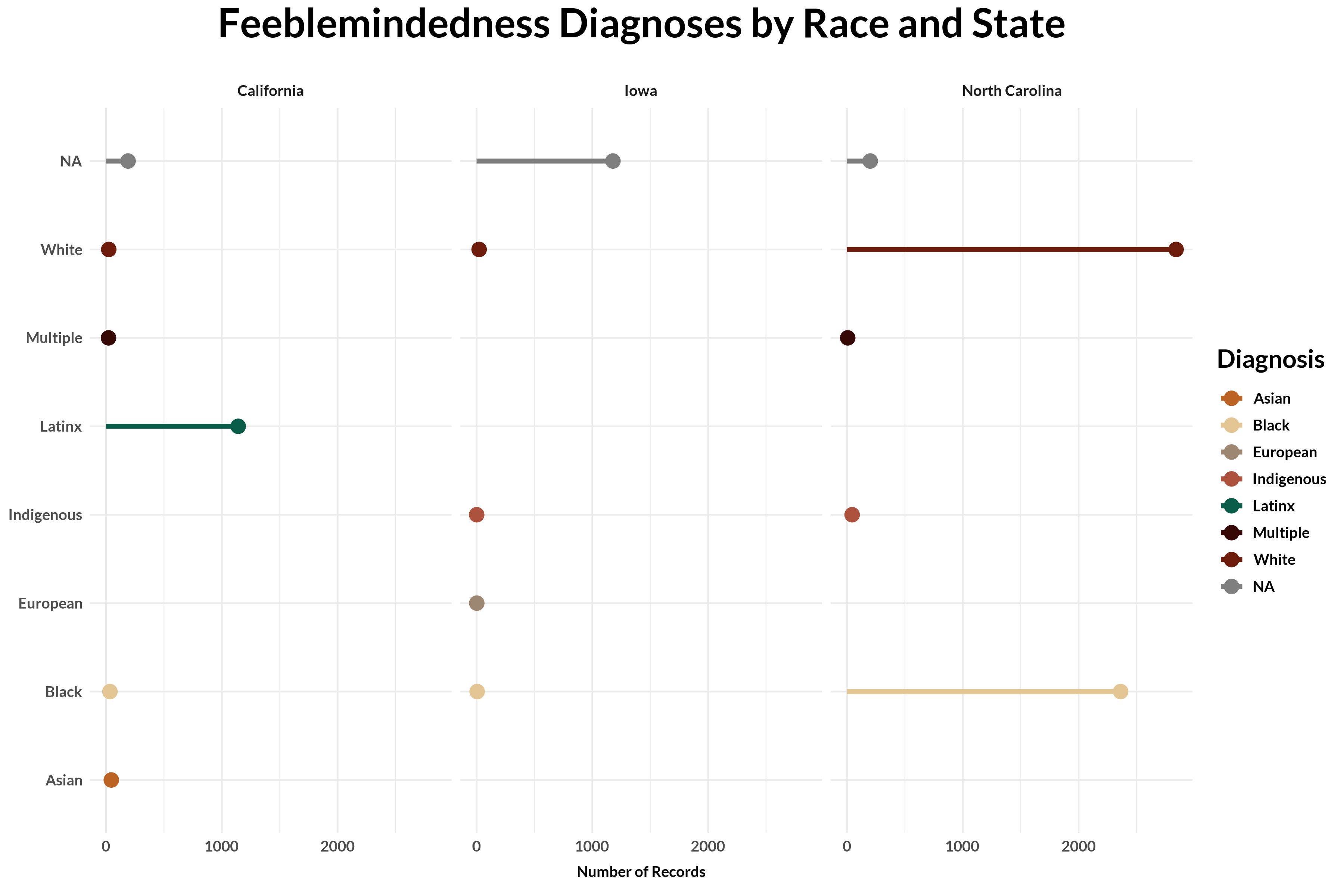
What We Can Say with DataIn North Carolina, however, the label was used widely in records where patients were described as both White and Black. It was a bit of a surprise to us that the diagnosis was actually used most often in patients recorded as White, even though people racialized as Black were sterilized at higher rates. Was being Black reason enough to sterilize in North Carolina? Did poverty and race interact? We would need to do further analysis to see what, if any, other data correlate with racialization in the recommendations.
While we would need to do deeper archival work (which might not yield answers) to understand how diagnosis and race interacted in each state, visualizing the difference between each of the states suggests to us that the interplay might itself have varied between states - perhaps as another instance of the patchwork of practices.
This page has paths:
- Looking at Eugenic Practices Across the Nation Jacqueline D. Wernimont